


PIM Health Check
Almost every mid-sized and large company now manages product information using a Product Information Management (PIM) system. Yet the results vary significantly. While some organizations can publish new products across all sales channels within hours, others still struggle with spreadsheets, manual coordination, and incomplete product data.
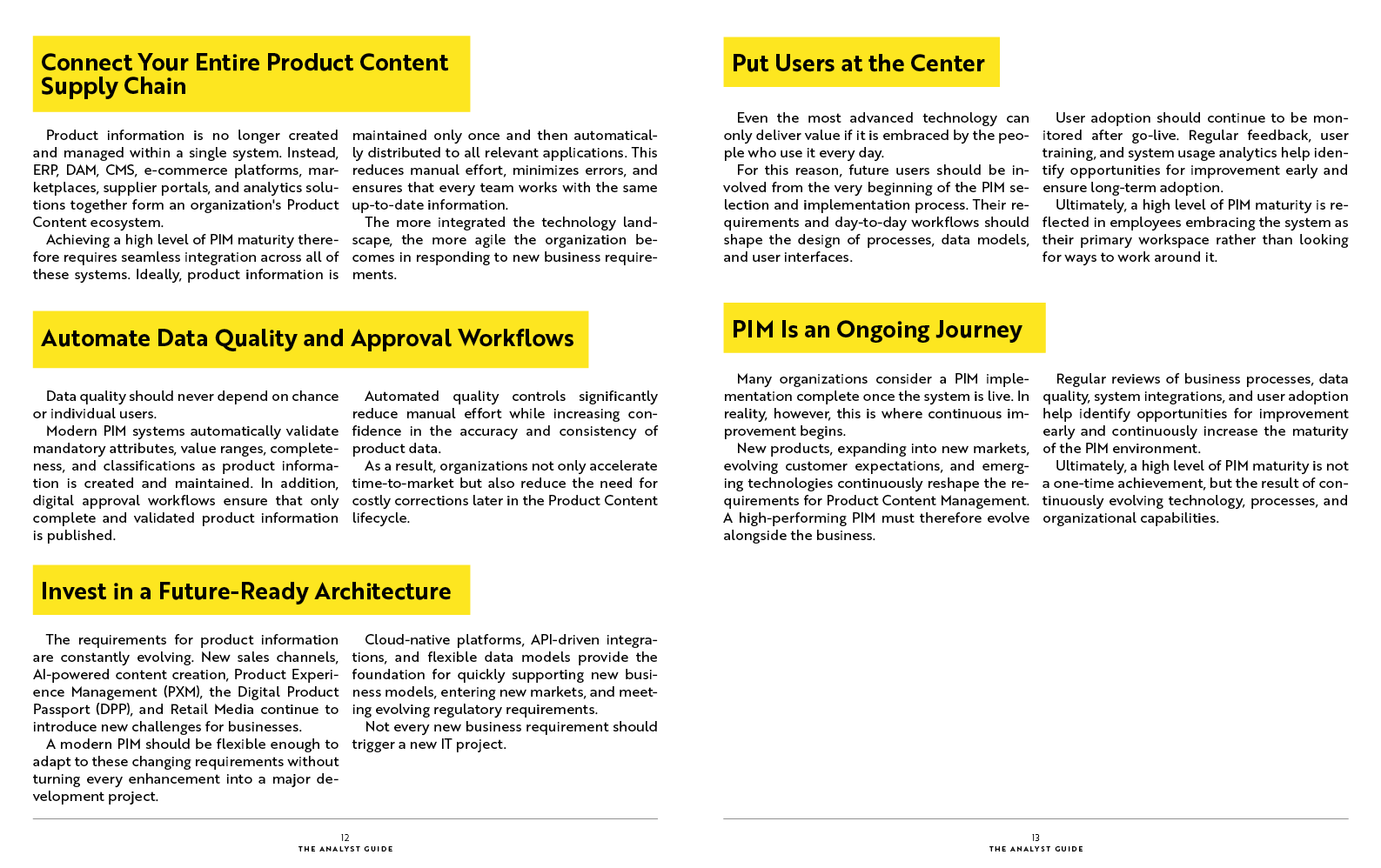
A modern PIM delivers its full value only when it serves as the central platform for all product information, integrates seamlessly with other business systems, and is actively adopted by the teams that rely on it every day. This is exactly what the term PIM Maturity describes.
A low level of PIM maturity not only leads to inefficient processes, but also slows innovation, increases time-to-market, and makes it more difficult to introduce new sales channels or digital business models. In contrast, organizations with a high level of PIM maturity benefit from automated processes, higher data quality, and a Product Content Strategy that can scale with the business.
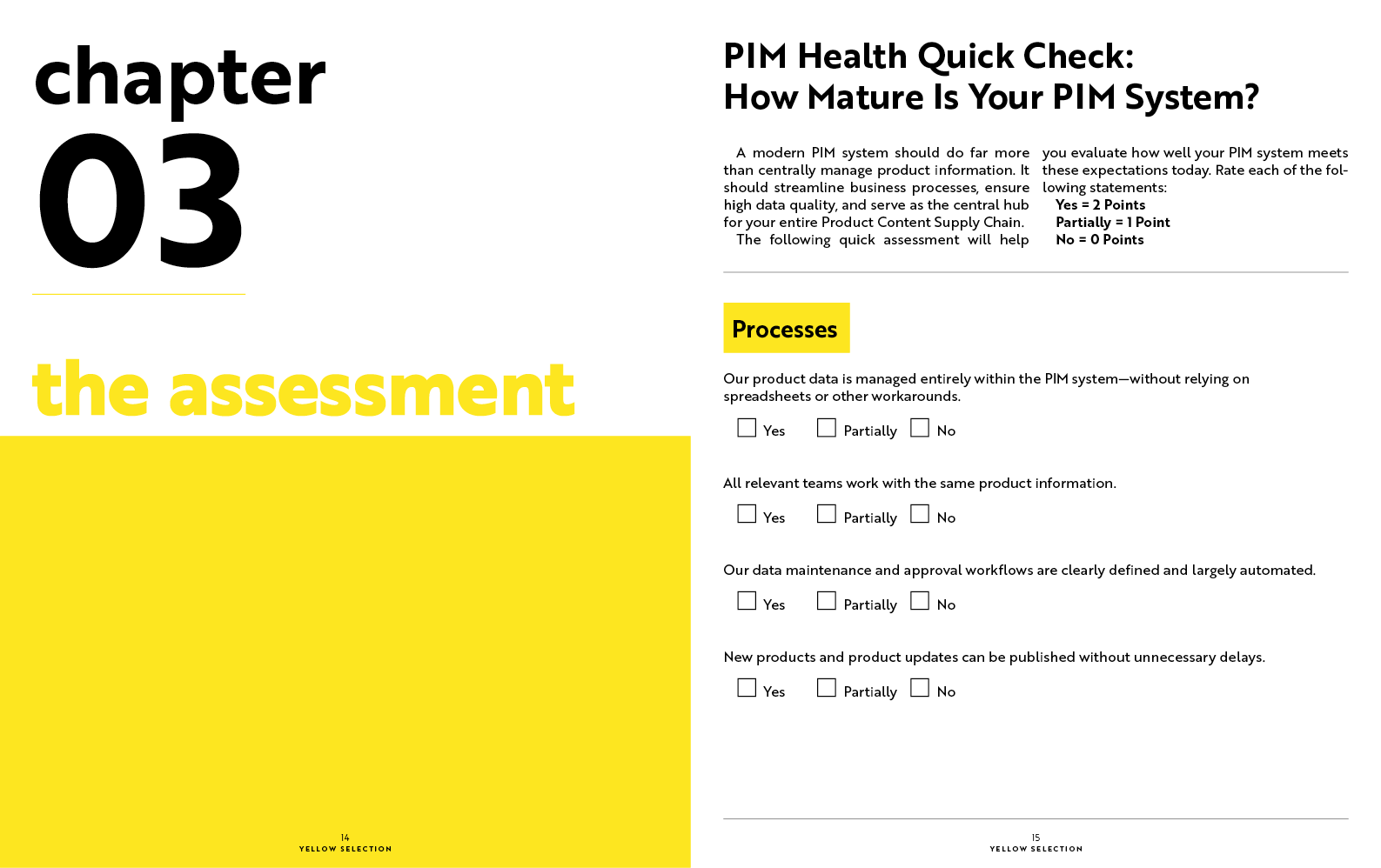
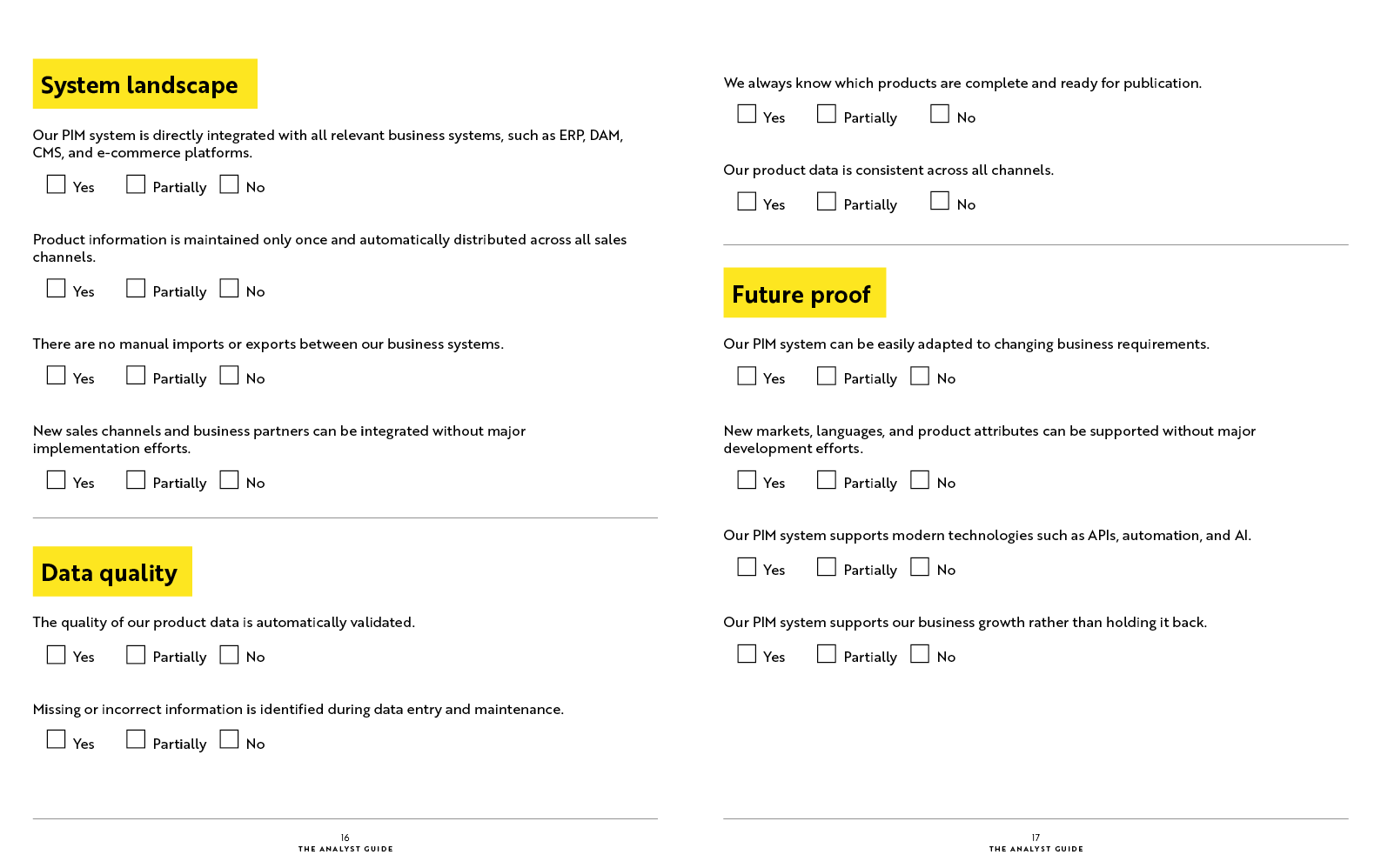
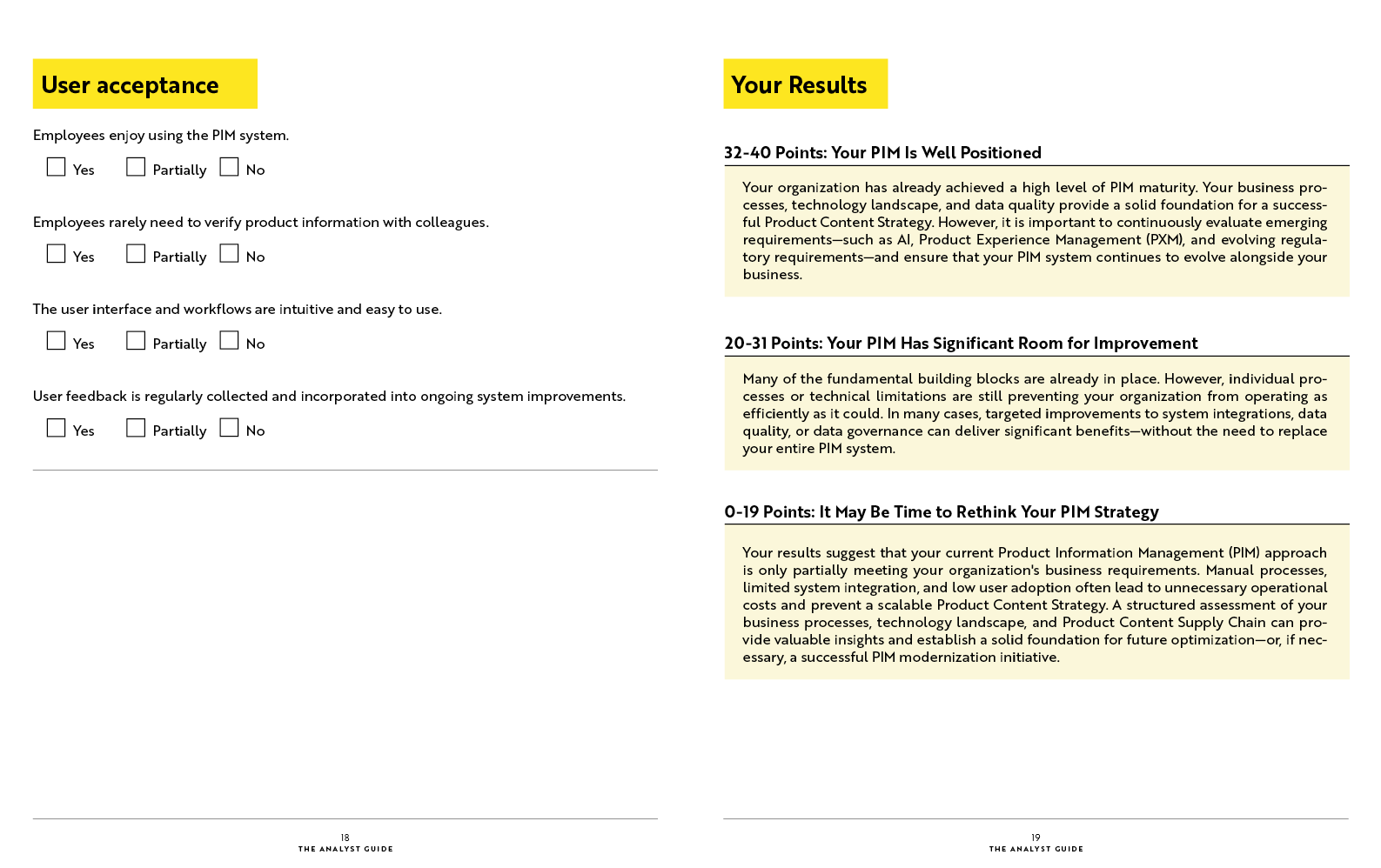
This guide will help you assess the maturity of your PIM system and identify opportunities for improvement. You'll learn how to recognize the most common warning signs of a low PIM maturity level and discover best practices that leading organizations use to optimize their product content processes.
Choose options